By clicking “Accept All Cookies”, you agree to the storing of cookies on your device to enhance site navigation, analyze site usage, and assist in our marketing efforts. View our Privacy Policy for more information.
The Importance of Balancing Macro and Micronutrients
The CrossFit Open is over, and now you’re probably more motivated than ever to improve your performance over the coming year. Nutriton supports your training, your recovery, and ultimately the results you see.
By
March 19, 2026

“Every bite counts. It’s not just about energy—it’s about optimal function.”
The CrossFit Open is over, and now you’re probably more motivated than ever to improve your performance over the coming year.
If there’s one thing I’ll keep saying again and again it’s this; nutrition sits at the base of our pyramid. It’s the foundation that supports your training, your recovery, and ultimately the results you see.
In our previous blogs, The Power of Whole Foods and Understanding the Refined Sugars and their Impact, we focused on what you should be eating and what to be more mindful of. By now, you should have a better understanding of how food quality affects your energy, performance, and overall health1. Now, we take the next step. Because once you’ve improved what you eat, the next question is:
👉 Are you fuelling your body with the right balance of nutrients?
The Macro and Micro of Nutrition
Think of nutrition like fueling a furnace.
The quality of the fuel matters (which we’ve covered), but so does the balance of what you put in. Too much of one thing and not enough of another, and performance starts to suffer. This is where macronutrients and micronutrients come in.
Macronutrients: Your Fuel for Performance
Macronutrients (or “macros”) are the nutrients your body needs in larger amounts to function and perform2. These are your main energy sources:
1. Carbohydrates – Your Primary Fuel
Carbs are your body’s go-to energy source, especially for high-intensity training like CrossFit & Hyrox. Carbs have had some bad rep recently and research also shows that many CrossFit athletes under-consume carbohydrates, despite their importance in fuelling high-intensity training and recovery2.
They:
- Fuel your workouts
- Support recovery
- Help maintain performance across sessions
Sources: whole grains, fruits, vegetables, legumes
2. Protein – Your Recovery and Repair System
Protein is essential for:
- Muscle repair and growth
- Recovery between sessions
- Supporting your immune system
Sources: meat, fish, eggs, dairy, beans, tofu
3. Fats – Your Long-Term Energy & Health Support
Fats often get a bad reputation, but they’re essential for:
- Hormone function
- Brain health
- Absorbing key vitamins
Sources: avocados, nuts, seeds, olive oil, oily fish
So… How Much Should You Be Eating?
This is where a lot of people get stuck. While everyone is different, here are simple, practical guidelines you can start with:
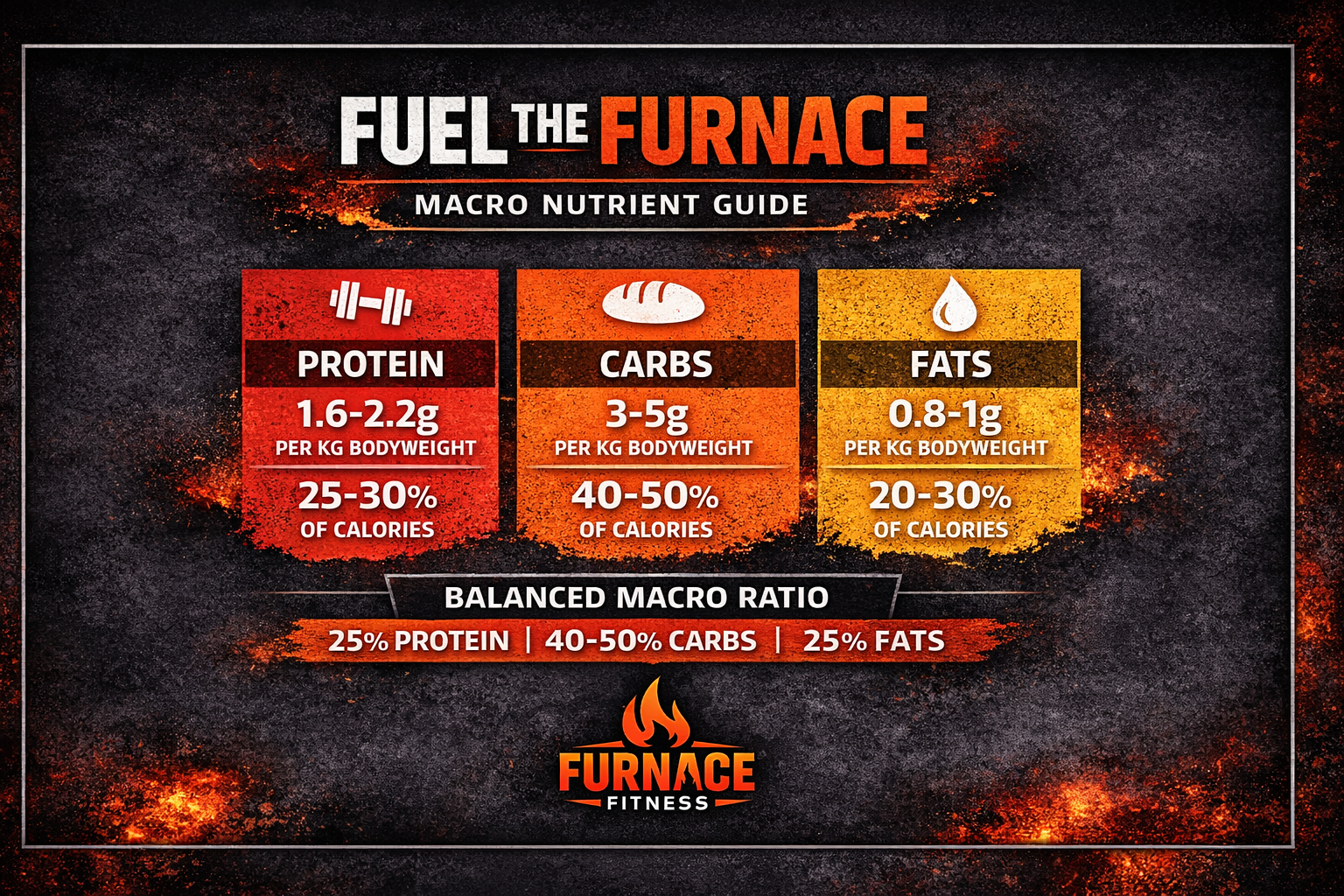
Protein
- Aim for: 1.6 – 2.2g per kg of bodyweight
- Example: 70kg person → 110–150g protein per day
👉 This is key if your goal is performance, recovery, or fat loss
Carbohydrates
- General range: 3 – 5g per kg of bodyweight
- Higher end if:
- You train frequently
- You’re doing high-intensity sessions
👉 Carbs = fuel for your training engine
Fats
- Aim for: 0.8 – 1g per kg of bodyweight
👉 Supports hormones, joints, and overall health
A Simple Ratio to Follow
If you prefer a simpler approach, think in terms of a rough split3:
- Protein: 25–30%
- Carbohydrates: 40–50%
- Fats: 20–30%
This doesn’t need to be perfect—consistency beats precision every time.
Micronutrients: The Small Details That Make a Big Difference
While macros give you energy, micronutrients are what allow your body to actually use that energy properly. Research continues to show that macronutrients and micronutrients work together to influence everything from metabolism to long-term health4.
Vitamins
Support:
- Immune function
- Energy production
- Recovery
Examples: Vitamin D, B vitamins, Vitamin C
Minerals
Support:
- Hydration
- Muscle function
- Bone health
Examples: Magnesium, potassium, calcium
Why Balance Matters
This is where everything comes together.
1. Energy & Performance
Macros give you the fuel—but micros ensure your body can actually use it efficiently.
2. Muscle Growth & Recovery
Not enough protein? You won’t recover properly.
Not enough carbs? Your performance drops.
Not enough micronutrients? Recovery slows down.
3. Long-Term Health
You can hit your calories and still feel terrible if you’re lacking micronutrients. This is why your first step, focusing on whole foods, was so important.
Bringing It All Together
If the first blog was about food quality, and the second was about reducing poor inputs, then this one is about; fueling your body properly for performance and progress. You don’t need to be perfect. You don’t need to track everything forever.
But if you:
- Focus on whole foods
- Stay mindful of sugar intake
- Hit a solid balance of protein, carbs, and fats
You’ll give your body exactly what it needs to; Train harder; Recover better and perform at a higher level.
What’s Next?
Want some simple, practical ways to put this into action?
Keep an eye out for our upcoming Furnace Fitness coaches’ favourite recipes designed to help you fuel your training without overcomplicating things.
Take the Next Step
If you’re unsure where to start or want help putting this into practice, speak to one of our coaches. We’ll help you build a nutrition approach that supports your training, your lifestyle, and your goals.
Not a member yet?
At Furnace Fitness, we don’t just deliver high-quality coaching on the gym floor, we support you across all aspects of your fitness journey, including nutrition, recovery, and long-term performance.
If you’re ready to train with purpose, fuel your body properly, and get more from your effort, now’s the time to get started.
👉 Get in touch today to find out how we can help you take your training to the next level. Contact us to get booked in for your Introduction and Discovery